
When sports organizations talk about distribution, the conversation usually turns to media rights, social platforms and paid promotion.
There is another distribution network sitting directly inside the fan base: creators.
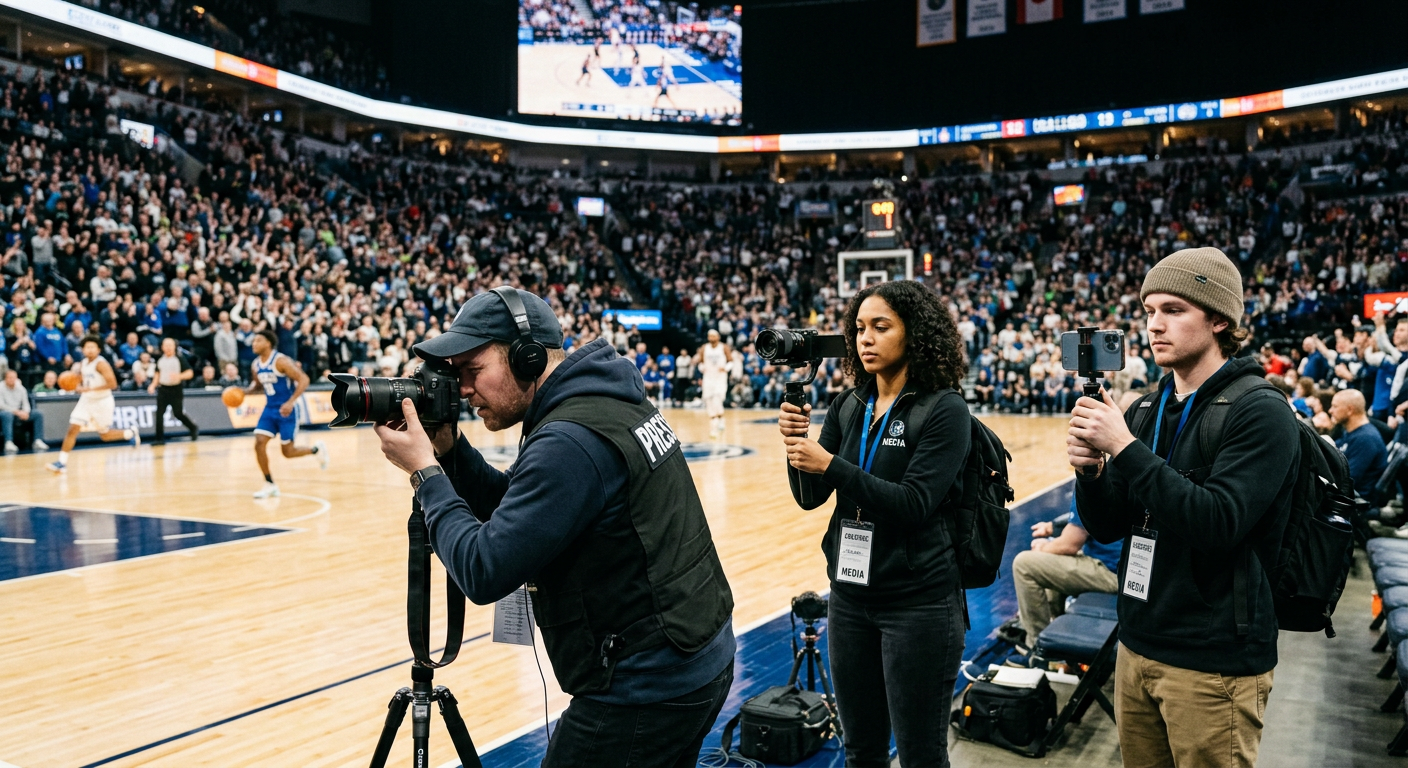
During the first season of the returned Criollos de Caguas, collaboration became one of the most important parts of our growth strategy. Sports pages, podcasters, photographers, commentators and basketball creators were already producing content for audiences that cared deeply about the league.
Instead of treating those creators as competition for attention, we treated them as part of the ecosystem.
That mindset matters.
A team account can tell its own story, but it cannot authentically occupy every corner of the conversation. Creators bring different voices, formats, communities and perspectives. They can interview players differently, debate games differently and translate moments for audiences that may never follow an official team account.
“That makes collaboration a form of distribution.”
It also makes it a form of trust.
Fans understand the difference between a team saying “this is exciting” and a creator they already follow deciding that something is worth talking about. The second carries a different kind of credibility.
The opportunity for sports properties is to make that participation easier.
Access matters. Information matters. Responsiveness matters. So does recognizing that not every valuable creator has a massive following.
A niche basketball account with a highly engaged local community may be more valuable for a specific objective than a much larger general-interest audience.
This is where sports marketers should move beyond follower count.
Look at relevance.
Does the creator understand the sport? Does the audience participate? Is the content consistent? Does the creator have credibility with the community the property wants to reach?
Those questions lead to better partnerships.
Collaboration also increases the volume and diversity of storytelling around a team without requiring the internal marketing department to produce everything itself.
That is especially important during a season.
A professional basketball team can generate hundreds of moments every week: practices, player stories, statistics, travel, community events, game-day arrivals, highlights, fan reactions, sponsor activations and postgame analysis.
No internal team can own every possible interpretation of those moments.
Nor should it try.
The better model is an ecosystem.
The official channels establish the brand voice and provide authoritative storytelling. Media covers the competition. Creators add personality, commentary and community perspective. Fans remix and share everything.
When those layers work together, the conversation becomes much larger than the team’s own following.
Brands entering sports should understand this too.
A sponsorship activation can become significantly more powerful when creators are part of the idea from the beginning rather than being asked to repost something at the end.
Give them something worth experiencing. Give them access. Give them a story.
Then let them tell it in their own voice.
That last part is important.
Collaboration becomes less credible when every participant is forced into identical copy and identical creative. The value of creators comes partly from the fact that their audience recognizes their voice.
Sports properties do not have to control every sentence to protect the brand.
They need clear boundaries, mutual trust and a good idea.
The future of sports media will continue to fragment. Fans will consume games and stories through more personalities, platforms and communities.
That is not a threat to the team brand.
It is an opportunity to expand it.
The question is no longer simply: how many people follow us?
It is also: how many communities are telling the story with us?