
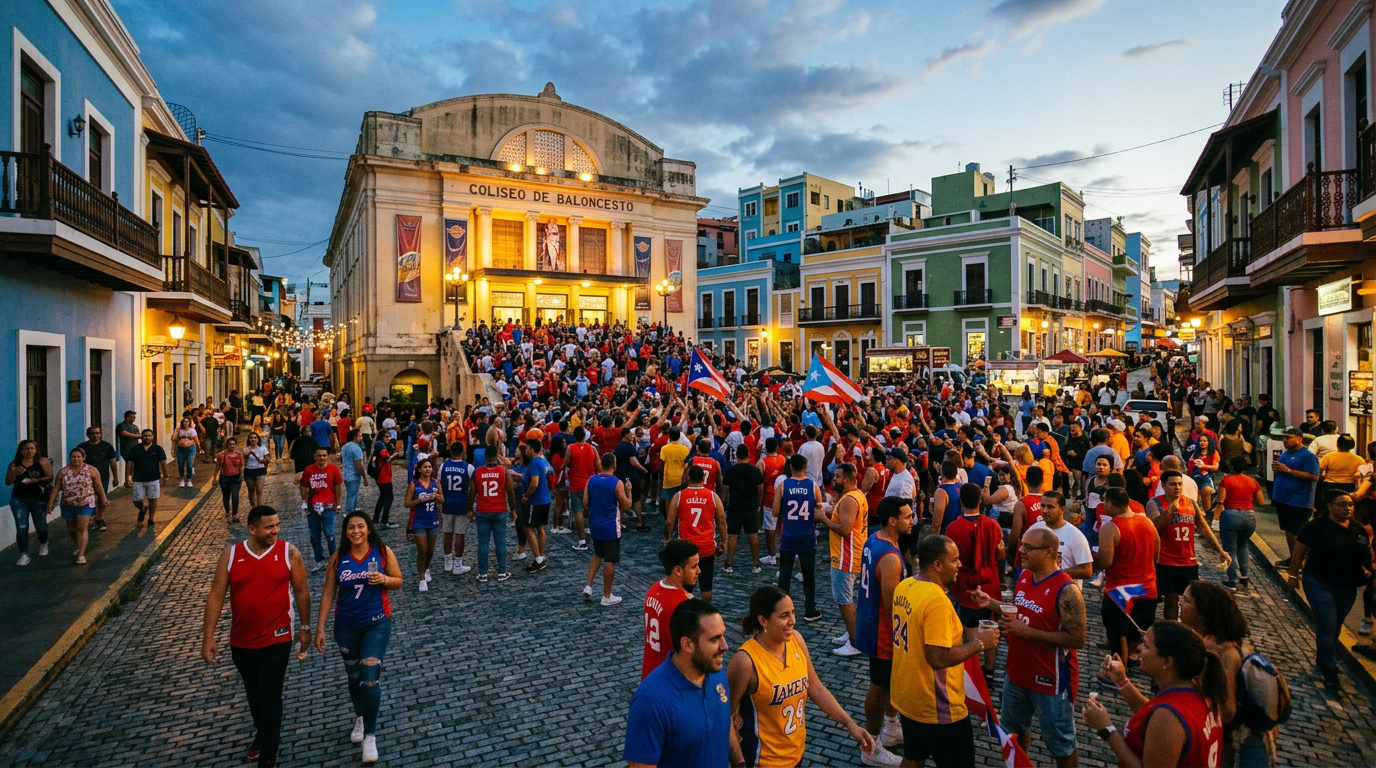
A professional sports team can play in a city without truly belonging to it.
Those are two very different things.
When we rebuilt the Criollos de Caguas brand, one of the clearest opportunities was to make Caguas part of the identity rather than simply the location printed underneath the logo.
That meant asking a bigger question:
What should this team mean to the place it represents?
Sports brands have a unique advantage. Unlike most companies, they are allowed to carry geography as part of their identity. A city name is not a targeting parameter. It is part of the uniform.
That creates both opportunity and responsibility.
The opportunity is emotional relevance.
Cities already have stories, symbols, language, rivalries, neighborhoods, history and pride. A team does not have to manufacture those things. It has to understand how to participate in them authentically.
For the Criollos, ideas around Caguas as the heart and center of Puerto Rico helped inform the brand. #SomosLaPresion became more than a slogan because it connected basketball intensity with the identity we were building around the city.
Uniforms became another storytelling tool. Instead of viewing alternate jerseys only as merchandise opportunities, they could reference history, place and local identity.
That is where sports and culture begin to overlap.
A jersey can become a piece of civic storytelling.
A game can become a gathering place.
A team can become a shorthand for where someone is from.
This is also why local relevance should not be sacrificed in the pursuit of broader reach.
There is a temptation in modern sports marketing to make every brand feel global from day one. Global ambition is valuable, but the strongest global sports brands usually have an unmistakable sense of place.
Their local identity is part of what makes them interesting to people elsewhere.
“You do not make a sports brand more universal by removing what makes it specific.”
You make the specific story compelling enough that others want to enter it.
Community participation is essential to that process.
Schools, local businesses, municipal partners, youth programs, longtime fans and cultural organizations all help define what the team represents beyond the arena. Those relationships are not side projects. They are part of brand building.
The same is true for sponsors.
A partner that understands the local community can create something far more meaningful than generic national creative placed inside a local venue. The strongest activation often begins with context: what matters here, to these people, in this moment?
That is cultural relevance at its most practical.
It is also good business.
A team that belongs to its city has more reasons to matter when the standings are difficult. It can create loyalty that extends beyond one roster, one star or one season.
Winning accelerates connection.
Identity sustains it.
That is why place should never be treated as background scenery in sports marketing.
The arena has an address.
The brand should have a sense of home.