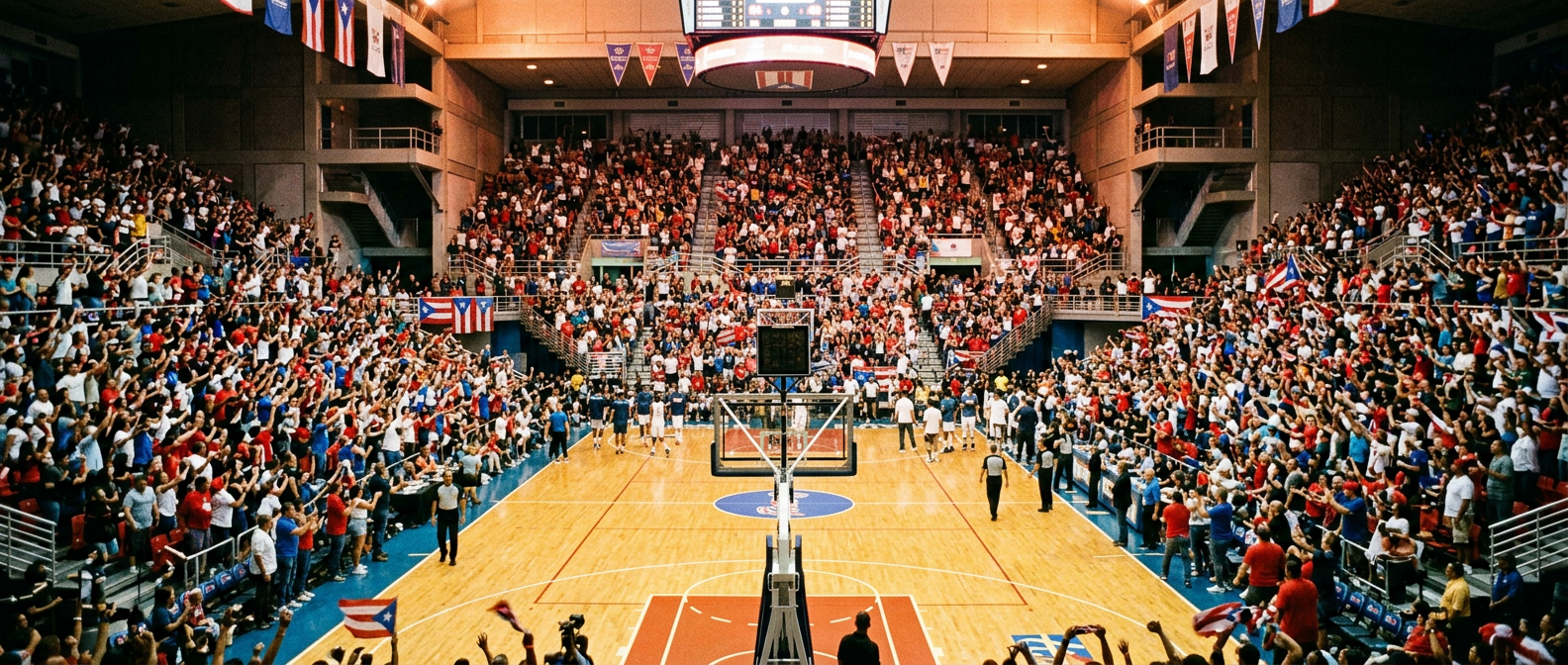
When the Criollos de Caguas returned to Puerto Rico’s professional basketball landscape, the marketing challenge started before there was a game to promote.
There was no active modern brand, no current digital community and no recent basketball presence in Caguas to inherit. That meant the first job was not selling tickets. It was giving people something to believe belonged to them again.
That distinction matters in sports marketing.
A team can announce a roster, publish a schedule and start selling inventory. A brand has to create meaning.
For the Criollos, that meant rebuilding around Caguas itself: its identity as the center and heart of Puerto Rico, its history, its people and the emotional connection between a city and a franchise returning after years away. The visual identity, content, language and eventually #SomosLaPresion all had to reinforce the same idea.
Before the first season, we launched a simple website with a lead form. There was no elaborate media campaign behind it. The objective was to begin identifying the people who were already interested in the return of basketball to Caguas and create a direct relationship with them.
“That early move reinforced one of the most important lessons I have learned in sports: anticipation is part of the product.”
Fans do not begin caring when the referee throws the ball in the air. They care during the announcement, the roster reveal, the uniform launch, the first look at the arena and the conversations with friends about what the season might become.
Every one of those moments is an opportunity to build the brand.
The next step was consistency. New social channels became an always-on connection with fans. Instead of treating content as promotion around game day, the goal was to make the team part of the daily sports conversation. News, personalities, collaborations, behind-the-scenes moments, graphics, video and community interaction all helped create familiarity.
That familiarity eventually becomes trust.
And trust matters because sports brands ask a lot from their audiences. We ask people to buy tickets before knowing the result. We ask them to wear the logo. We ask sponsors to invest in the platform. We ask communities to identify with the team.
The strongest answer to all of those asks is a brand that has consistently shown up.
Another lesson from the return was the importance of borrowing distribution before you fully own it. We collaborated with sports creators, media personalities and existing basketball communities that already had credibility and audiences. Those relationships helped the brand enter conversations it could not have created alone.
That is not a shortcut. It is good ecosystem thinking.
Sports organizations often behave as if every piece of attention has to originate from their own channels. In reality, fandom is decentralized. Fans discover teams through creators, players, podcasts, group chats, media coverage, highlights and other fans.
The job of the team is to make participation easy.
By the end of that first season, the story was much bigger than a launch campaign. The franchise had won its first championship in 18 years, developed a recognizable identity, created new direct-to-fan channels and established a foundation for future seasons.
The championship made the story unforgettable.
But the brand work had started long before the winning.
That is the broader lesson for marketers.
Do not wait for the product moment to begin building the relationship. Build the audience, language, rituals and community early enough that when the big moment arrives, people already feel like they are part of it.
In sports, the first game may be opening night.
For the brand, opening night should happen much earlier.